Write a LinkedIn referral request someone can pass on
Give referrers a buyer they can recognize, a problem to listen for and a short note they can forward without sharing anyone’s details publicly.
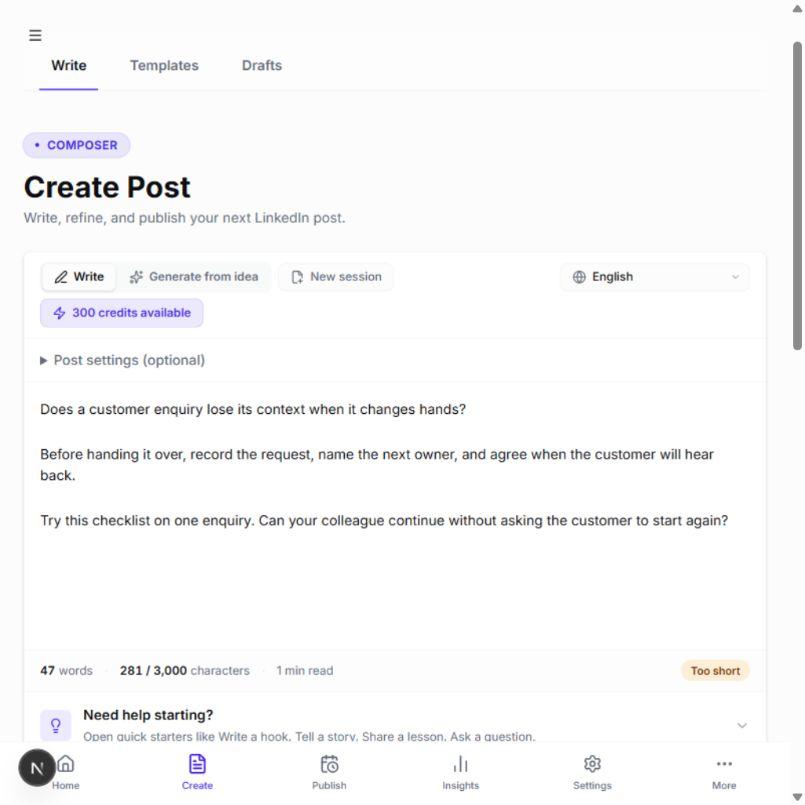
What makes a referral request easy to pass on?
Name the person you want to reach, the situation that tells a referrer your help is relevant, and the first small piece of work you offer. Ask your network to pass on a short note privately, rather than asking people to tag a buyer or share their contact details in the comments.
A former colleague might remember that you work in support operations but not know when to recommend you. Give them a cue they can hear in a conversation: “We’ve started covering support across two shifts, and nobody knows who owns the cases left at the end of the day.” That is easier to recognize than “a company looking to improve CX.”
Give the referrer enough to judge the fit
- Who: a support lead at a small software company with evening coverage.
- When: unresolved requests are passed between shifts without a named next owner.
- What you offer: map one handover and suggest what to record about ownership, the customer promise and the next action. Only include work you can actually do.
- What to do: pass on your note or profile link. Let the buyer decide whether to reach out.
From a broad ask to a recognizable situation
- Hard to place
- If you know any SaaS companies that need help with support, please send them my way.
- Easy to recognize
- If a support lead tells you that yesterday’s unresolved cases keep coming back with no clear owner, send them my profile. I help teams map the shift handover and decide what belongs in it.
Fictional wording, not a client engagement or a measured result.
Write the public ask and the private note separately
The public version explains why you are asking. The private version should still make sense when forwarded on its own. Don’t put a buyer’s name, a private conversation or an invented endorsement into either version. A direct introduction is fine when both people want one; it is not a prerequisite.
A public post and a note someone can forward
Prepared fictional examples. Replace the offer and situation with work you genuinely take on.
- Public LinkedIn post
- A second support shift shouldn’t mean a second investigation into yesterday’s open requests. I’m looking to meet support leads at small software companies where cases still change hands without a named next owner. I can map one handover with the team and propose what to capture before the shift ends. If someone comes to mind, feel free to pass them this post privately. No need to tag them here.
- Private note to pass on
- This consultant helps software support teams work out what to pass between shifts when ownership gets lost. If that sounds like what you’re dealing with, here’s their profile: [your profile URL]. You can reach out directly if useful.
Draft it in HumanEcho, then check what you’re asking people to forward
Put the buyer, the situation, the first deliverable and the desired next step in the LinkedIn Post Generator’s “Topic or rough idea” field. Ask for a public post, then use the same brief to write your separate two-sentence note. State what you have not promised: no claims about faster response times, no client names and no endorsement added by the tool. Choose the audience and language before drafting.
Read the forwarding note without the public post. Does it explain the fit by itself? Check that the profile destination matches the offer. You can copy the output without saving it, or sign in to save it as a workspace draft. Drafting doesn’t send a message, ask for a referral or publish the post.
Check whether your profile supports the ask · View current HumanEcho plans