What should a client prepare before your first consulting session?
Turn a consulting kickoff checklist into a useful LinkedIn post: explain what to bring, what can wait and what the first session can decide, with a fictional example.
What should a client bring to the first consulting session?
Ask for the decision they need to make, a short description of the current situation, one relevant example and the person who can confirm priorities. Separate essentials from optional background. Explain what the session will produce and what needs further investigation. A useful LinkedIn post can answer those questions before a buyer books a call.
A prospective client may understand your service yet hesitate because they do not know how much preparation it requires. A kickoff checklist makes that effort visible. It also helps someone recognize when they are ready to work with you, without promising that one conversation will solve the whole problem.
Start with one service and one decision
Choose a session you actually offer. An introductory fit call, a paid diagnostic and an implementation kickoff have different purposes. Do not combine their preparation into one long list. For a diagnostic session, for example, the decision might be which part of a customer handoff to investigate first.
Write the expected output before the checklist: an agreed problem statement, a list of missing evidence or a scoped next step. Only name an output you can deliver within the agreed session. If a recommendation requires access or analysis afterward, say so.
Give each requested item a reason
- The question: What must the team decide, and by when? This prevents a broad discussion from replacing the actual buying need.
- The current process: A short description of who does what today. A few sentences may be enough; do not require a polished presentation.
- One relevant example: A fictional or safely redacted illustration of the problem, shared only through an agreed channel. Say what can be discussed without sending records in advance.
- The constraints: Who approves changes, what cannot change and which deadline matters. These affect what a useful next step looks like.
Then name what can wait. A complete system export, a finished strategy deck or access to every tool may be unnecessary for the first conversation. If particular evidence is essential for your service, explain that requirement and what happens when it is unavailable.
A post a buyer can use
This fictional example describes a consultant offering a customer-handoff diagnostic. Replace the scope and preparation with your actual service. It is prepared editorial copy, not a customer story or a live AI output.
Open the sample kickoff post
Fictional editorial example. No client records or measured outcomes are used.
- Service brief
- Session: customer-handoff diagnostic Buyer decision: where to investigate delays first Bring: decision, process summary, one safe example, constraints Output: agreed question and missing evidence Not included: a completed audit or implementation
- Sample LinkedIn post
- Before our first customer-handoff diagnostic, you do not need a polished presentation. Bring four things: 1. The decision your team needs to make. 2. A short outline of how an inquiry reaches the next person today. 3. One fictional or redacted example you are comfortable discussing. 4. The deadline and constraints we need to respect. We use the session to agree on the question to investigate and identify missing evidence. A completed audit and implementation are separate work. If you cannot share an example yet, tell me before booking so we can discuss whether the session will still be useful. Please do not put customer details or account access in the comments. Considering this kind of review? Message me with the decision you need to make, and we can check fit and scope.
The next step asks for a buying question, so the reader can inquire without disclosing private business material. Use a booking link instead only if it leads to the right session and explains any fee or preparation requirement.
Turn your own notes into a reviewed draft
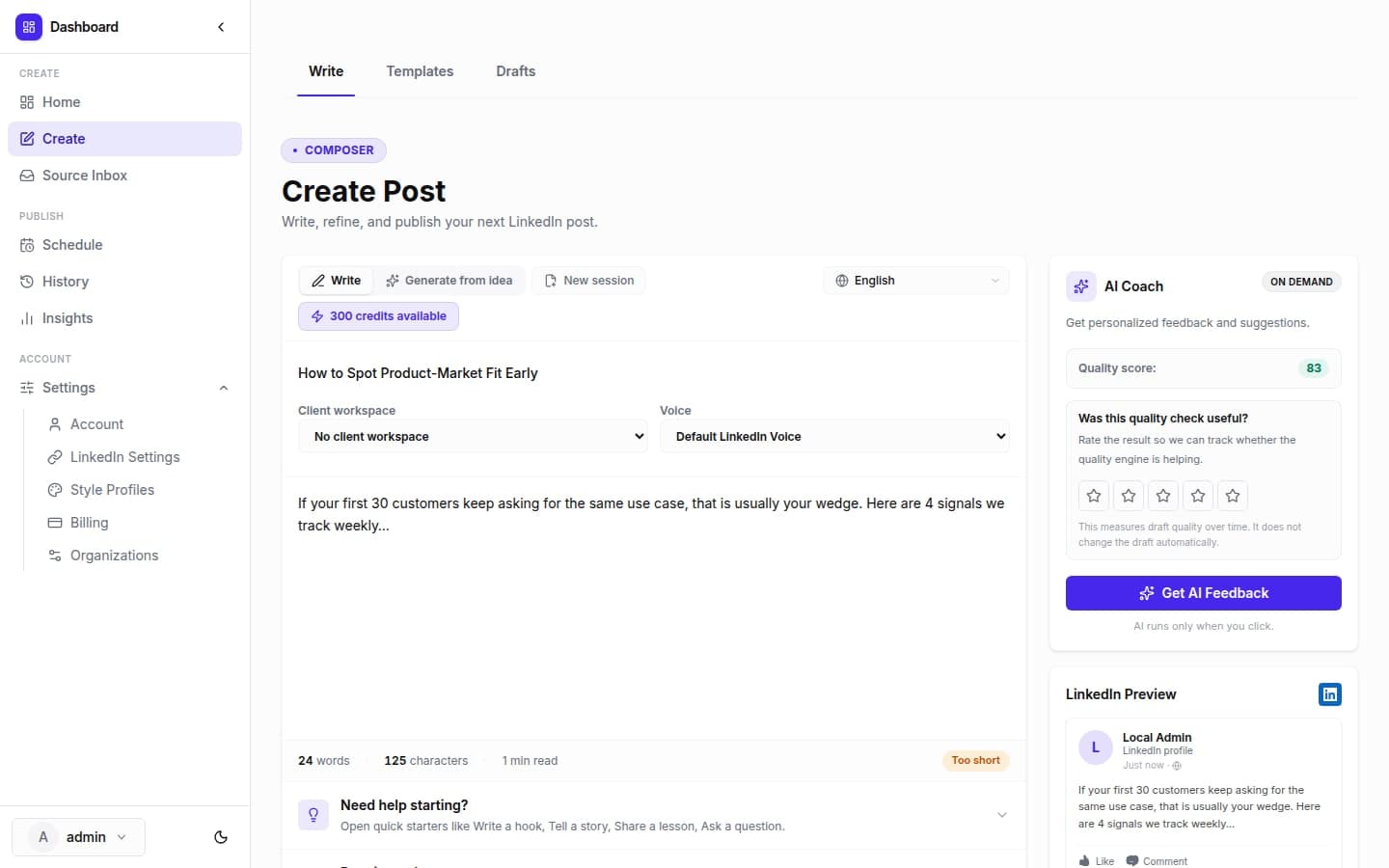
In HumanEcho, start from your own idea and provide a nonconfidential brief: the session, buyer decision, preparation, expected output and boundaries. Ask for a post that explains those details plainly. If you use a writing style profile, treat it as guidance and review the wording yourself.
Compare the draft against your actual booking page or service agreement. Remove invented steps, turnaround times and promises. Check that the opening answers the preparation question and that the CTA leads to the correct next step. Save the draft after review; scheduling or publishing is a separate choice.
The free post checker can suggest editorial improvements. It cannot confirm your service terms, protect confidential input for you or predict inquiries. Use only material you are authorized to submit.
Writing service content regularly? Compare current HumanEcho plans for drafting, review and scheduling. For a broader writing routine, use the LinkedIn content workflow guide.
