Build a LinkedIn content workflow that survives a busy week
A practical operating model for capturing ideas, drafting with AI, reviewing posts, and keeping a publishing queue moving.
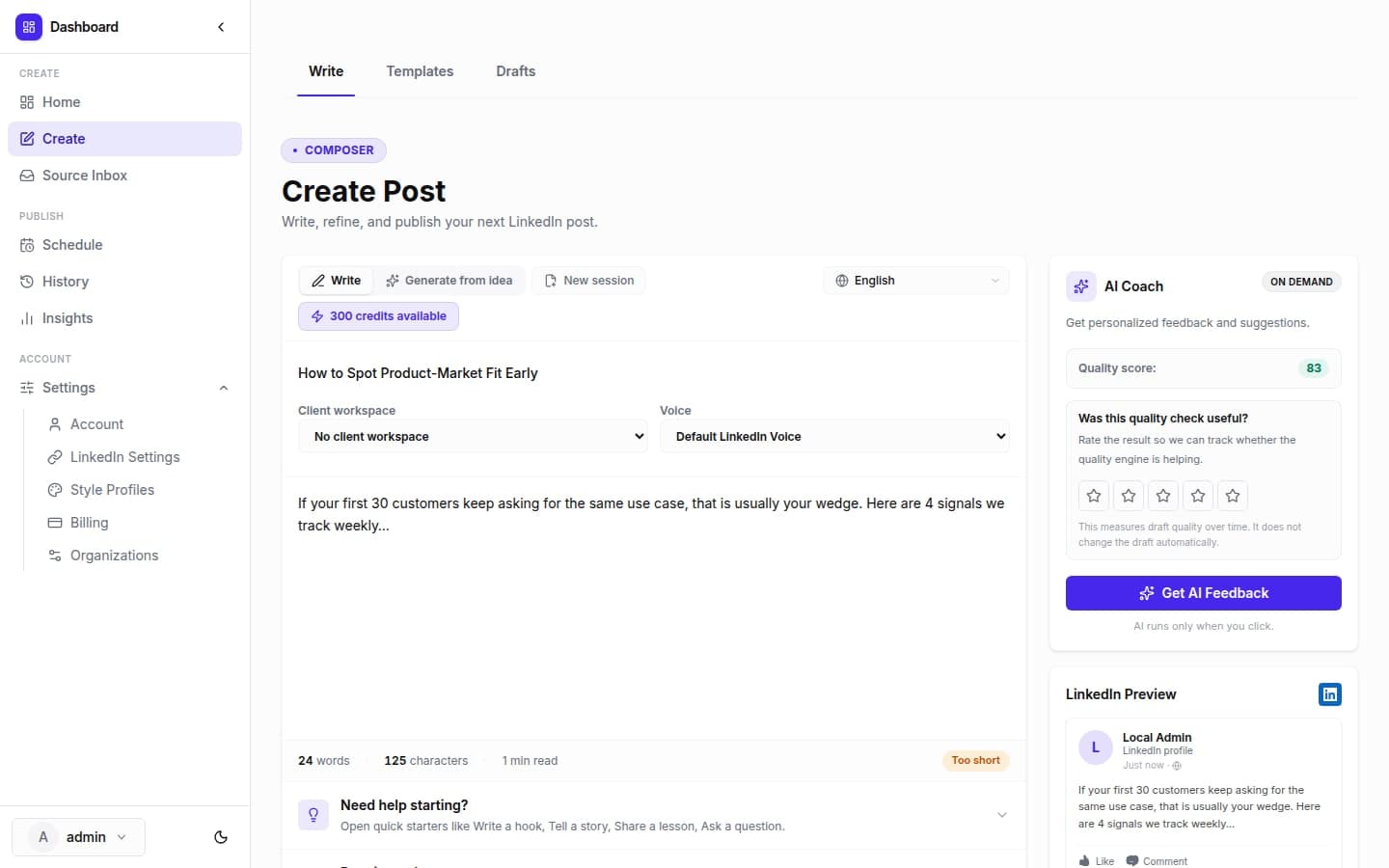
Start with an inbox, not a blank editor
The most reliable LinkedIn workflow starts before writing. Keep a single place for rough ideas, customer questions, newsletter excerpts, research notes, and internal wins. The goal is to remove the blank-page step from your publishing week.
Once the source material is captured, the AI draft should produce a reviewable starting point, not a final post that skips judgment. That distinction keeps the workflow useful for teams and solo operators.
Use a repeatable approval rhythm
- Capture ideas as they happen.
- Generate a draft with the right voice profile.
- Review hook, claim, CTA, and language fit.
- Schedule only posts that are ready to stand behind.
Track the queue, then learn from history
A publishing queue is only useful when the team can see what is scheduled, what failed, what needs attention, and what already shipped. After publishing, history and insights help the next draft get sharper.
