How to answer pricing objections in a LinkedIn post
Explain consulting scope and pricing without a defensive sales pitch. Includes buying criteria, a fictional worked example and a draft-review checklist.
How do you answer a pricing objection in a LinkedIn post?
Explain what changes the scope and price, show how a buyer can compare options, and name a situation where your service would not be necessary. A public post should help readers make a decision. It cannot resolve a private quotation without knowing the work involved.
For an independent consultant, “Why does this cost more than a template?” is a useful topic because the answer reveals what the buyer is actually buying. You can explain that distinction without criticizing cheaper alternatives or turning an imagined conversation into a customer story.
Choose the question behind “too expensive”
The same phrase can mean different things. A buyer may not understand the deliverable, may be comparing a different scope, or may simply have a smaller budget. Pick one of these questions for the post. Trying to rebut all of them usually produces a long sales pitch.
For this example, the question is: “When is a tailored onboarding review worth considering instead of using a checklist?” It concerns the fit of the work, not a claim that consulting is always better. If you have never received this question, introduce it as a buying question rather than saying a client asked you.
Separate the deliverable from the promised result
Write down what you actually provide: which materials you examine, what the buyer receives, what they must supply and what remains outside the scope. Then identify what you cannot promise. A prioritized review is a deliverable; improved retention is an outcome that depends on implementation and other factors.
Price can differ because a review covers more journeys, includes interviews or requires implementation support. Mention only factors that affect your actual offer. Do not invent a price range, a saving or an estimated return to make the comparison feel complete.
A comparison the buyer can use
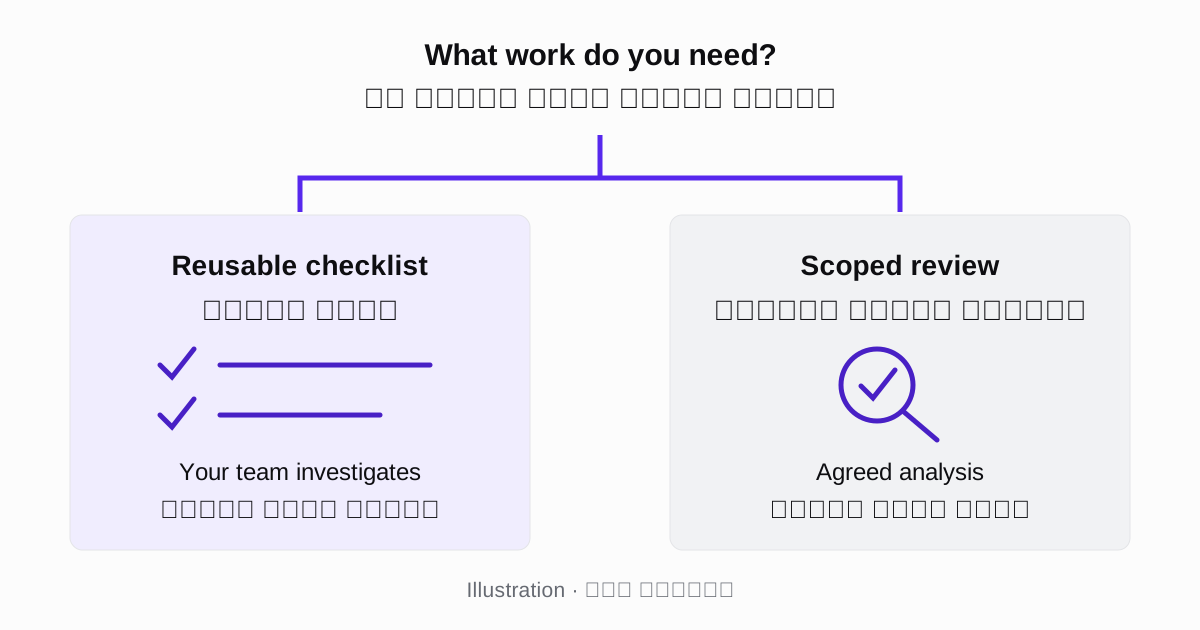
A checklist can be enough when the team needs a starting structure and can investigate the details itself. A tailored review may fit when the team needs help choosing what to investigate and interpreting the available evidence. Those are different jobs; neither option guarantees a business result.
Make the comparison about the work
- A reusable checklist
- A starting set of questions. Your team chooses what applies, gathers evidence and decides what to change.
- A scoped review
- An agreed examination of your specific journey, with observations and prioritized questions. Implementation is separate unless the offer includes it.
Illustrative buying criteria, not a description of every checklist or consulting service.
Open the sample pricing-objection post
Fictional editorial example, not a customer conversation or live HumanEcho output.
- Writing brief
- Audience: a small SaaS team comparing an onboarding checklist with a review Deliverable: observations and prioritized investigation questions Boundary: no implementation or promised retention lift Next step: describe the decision, without sharing private data
- Sample post
- “Do we need an onboarding review, or can we start with a checklist? If your team needs a structure for its first pass and can investigate the details, a checklist may be enough. A tailored review becomes worth discussing when you have several possible problems but need help deciding which ones the evidence supports. The work is to examine the agreed journey and produce observations and prioritized questions, not to promise a retention increase. The scope depends on the journeys and evidence available. Implementation is a separate piece of work unless explicitly included. Before comparing quotes, ask what each option examines, what you receive and what your team must do next. If you want to discuss fit, send me the decision you are trying to make. Please leave customer records and account access out of the message.”
Edit it before adding a call to action
Replace the example with the service you actually offer. If your review includes implementation, say so; if it does not, keep the boundary visible. Remove any sentence implying you have completed this work for a customer unless that is true and you have permission to discuss it.
Use one next step that matches the question. Asking readers to describe the decision they face makes more sense here than demanding a booking before they understand the scope. A public comment can stay general; confidential material belongs in an appropriate agreed channel.
Turn the outline into a reviewed draft
In HumanEcho, you can start from your own idea in Arabic or English, review the wording and save a draft. Supply the real audience, deliverable and boundaries. Writing samples can guide the style, but you still need to check every factual statement. Saving a draft is separate from choosing to publish or schedule it.
For a single post, the free post score checker can suggest edits. Its score does not prove that a claim is accurate, predict qualified inquiries or establish whether your price is appropriate.
Need a repeatable drafting workspace? Compare current HumanEcho plans. For help keeping the opening specific, read the LinkedIn hooks guide.
