Write a LinkedIn workshop invitation people can evaluate before registering
A practical invitation brief for consultants: name the audience, show what participants will do, confirm the logistics and lead to one registration page.
What belongs in a workshop invitation?
A useful LinkedIn workshop invitation tells readers who the session is for, what they will practise, when and where it happens, what attendance costs and how to register. Describe a task they can complete during the session rather than promising a business result afterward.
For a consultant running a small workshop, that distinction matters. “Build a first draft of your customer-handover checklist” gives a reader something to assess. “Transform your customer experience” does not explain the work or the level of the session.
Define the exercise before writing the opening
Write a short brief for yourself. Name the intended participant and one problem they already recognize. Then describe the exercise, what they should bring and what they can reasonably leave with.
- Audience: “Team leads who pass customer enquiries between shifts” is more useful than “anyone interested in leadership.”
- Exercise: map a fictional enquiry from first reply to handover, identify missing information and draft a checklist.
- Preparation: ask participants to bring a blank process outline, not customer names, messages or other confidential records.
- Takeaway: a draft they can review with their team, not a guaranteed reduction in complaints or response time.
Replace a broad promise with the session’s actual work
- Too vague
- Join our exclusive workshop and unlock the secrets to exceptional customer service. Limited spaces—don’t miss out!
- More useful
- In this 45-minute workshop, support team leads will map a fictional enquiry handover and draft a checklist covering the request, next owner and promised response time. Bring a blank workflow outline; no customer records are needed.
Fictional invitation wording for illustration, not a real event or a measured customer outcome.
Check the details a reader needs to attend
Before drafting, confirm the date, start and end time, time zone, online platform or physical venue, session language, cost and registration destination. Say whether a recording, workbook or certificate is included only when you have actually arranged it.
For a bilingual audience, “7 p.m.” is incomplete. Use a named time zone in both versions and check the date and time shown on the registration page. If attendance is paid, make the cost and applicable terms easy to find before registration.
A genuine booking deadline or capacity limit can help someone decide. If neither exists, omit urgency rather than inventing “last seats.” A participant needs a clear reason to attend, not an unsupported scarcity claim.
Draft from the approved brief in HumanEcho
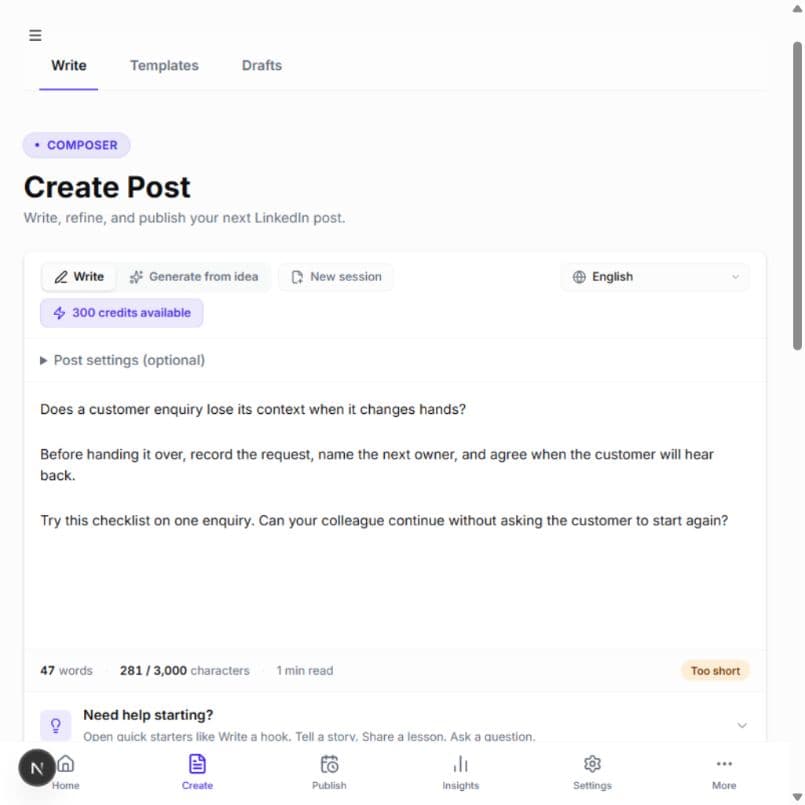
Open the LinkedIn Post Generator and put the brief in “Topic or rough idea.” Use “Role or niche” for your actual professional context and “Target audience” for the people who would benefit from the exercise. Choose the language and tone, then ask for a concise invitation that preserves the supplied details.
Include this editing instruction: “Do not invent dates, credentials, attendance numbers, testimonials or outcomes. Keep unconfirmed logistics in brackets for my review.” This gives the draft clearer boundaries; you still need to check every claim.
Read a workshop brief and invitation example
Prepared fictional example, not a scheduled event, customer testimonial or generated product output. Replace every bracketed field and confirm the complete details before publishing.
- Example brief
- Audience: support team leads. Topic: clearer enquiry handovers. Format: 45-minute online workshop in Arabic. Exercise: use a fictional enquiry to map the handover and draft a checklist. Bring: blank workflow outline; no customer data. Date, time zone, attendance fee and registration link: not yet confirmed. Do not claim certification, a recording or measured results.
- Illustrative invitation
- Does the next shift know what was promised to a customer? I’m preparing a 45-minute online workshop for support team leads on enquiry handovers. We’ll work through a fictional example, identify the information a colleague needs and draft a checklist you can review with your team. Bring a blank outline of your workflow. Please do not bring customer records. Language: Arabic Date and time: [confirmed date, start/end time and time zone] Attendance: [confirmed fee or free attendance] Details and registration: [verified registration link]
Review the invitation and registration page together
Read the post as someone who has never met you. Can they tell whether the workshop fits their experience? Does the registration page repeat the same exercise, duration, language, cost and logistics? Open the link on a phone and check the route without submitting a registration just for testing.
Use one main registration destination. If the booking belongs on a page, do not also require a comment or direct message unless that is genuinely part of your process. For Arabic and English versions, compare the facts line by line; translating “draft a checklist” must not turn it into a promise to fix an entire support operation.
You can copy HumanEcho’s draft; saving it to the workspace requires sign-in. Saving is not publishing. The writing workflow does not create the event, run the session or manage registrations. Confirm those arrangements separately, then decide when to publish the invitation.
